Journal ·
How Much Stage Time Works at a Gala Dinner: A Pacing Guide
More live music does not make a gala evening feel richer — better-placed music does. A guide to how much to play, and when.
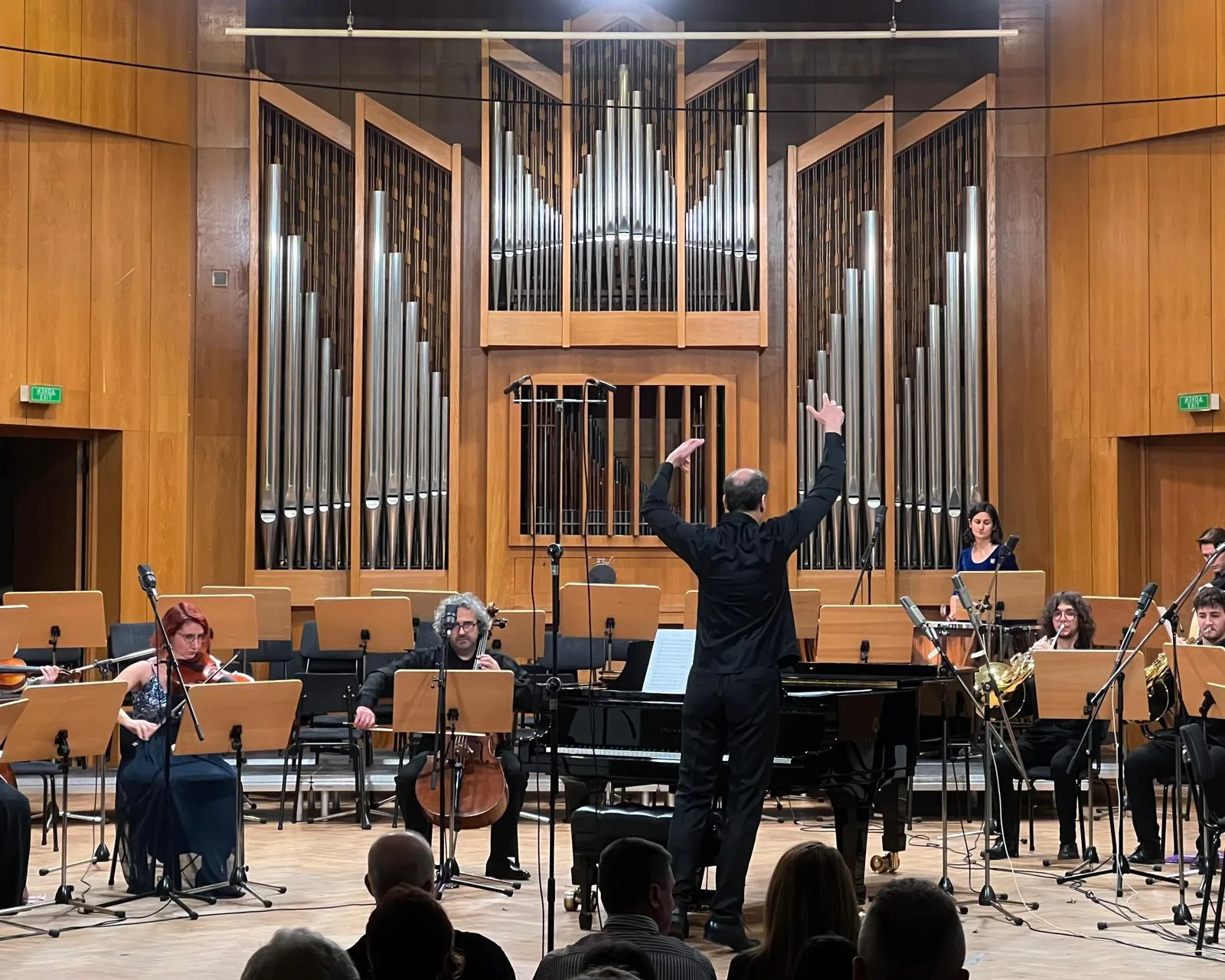
A gala dinner rarely needs more than three-quarters of an hour to an hour of live music across the whole evening — and where those minutes fall matters far more than how many there are. Rather than one long performance, the evenings that hold a room are usually built from three or four shorter appearances threaded through the night: an arrival, a first highlight, a centrepiece, and a close. The stage time is modest; the effect is not.
The instinct to programme more music is understandable and almost always wrong. A gala is a social occasion first — guests come to talk, to be seen, to mark something together. Music that runs too long stops being a gift and becomes an interruption. The craft is in restraint, and in placing each moment where it will be felt.
How much live music does a gala dinner need?
For a dinner of three or four hours, plan for roughly 45 minutes to an hour of performed music in total, divided into distinct moments rather than delivered in a block. Any more and the room tires of being asked to listen; any less and the evening never quite lifts above the sound of cutlery. The figure is a starting point, not a rule — a concert framed as a gala will carry far more, a working awards dinner far less.
Where the music should sit across the evening
The arrival. Music as guests enter and take their drinks does more than fill silence — it tells everyone, without a word, what kind of evening this is. Ten to fifteen minutes of unhurried playing sets the register.
The first highlight. Once guests are seated, a single arresting piece — three or four minutes, no more — turns the room’s attention to the front and marks the true start of the evening. It rewards arriving on time and settles the room before the first course.
The centrepiece. The longest continuous stretch, ten to twenty minutes, belongs after the main course, when guests are content and unhurried. This is the performance the evening is remembered for, and the one worth designing most carefully.
The close. A short, warm final piece as coffee is served sends people out on the feeling you want them to carry home. It is the last thing they hear, and the first thing they will describe tomorrow.
How long should each set be?
Shorter than you think. Seated guests give a performance perhaps three to five minutes of full attention before conversation returns; the centrepiece can hold longer because it is framed as the evening’s event, with the lights and the room turned towards it. The reliable discipline is to leave a little early. A set that ends while the room still wants more is worth two that outstay their welcome.
Good pacing means no one in the room is ever waiting for the music to end — or wishing it hadn’t.
Pacing music around dinner service
The single most common cause of a ruined performance is a clash with the kitchen. Music and service cannot occupy the same minutes: plates arriving, staff crossing the floor and the murmur of a hundred conversations will defeat any ensemble. Agree the running order with the caterer and the venue together, well in advance, so that each performance falls into a gap in service — after plates are cleared, before the next course is called. The centrepiece in particular needs a protected window that no one will cut when the evening runs late.
What changes the numbers
Every figure above bends to the evening. Speeches and awards compete with music for the room’s attention, so the two must be spaced, never stacked. A dance floor later in the night shifts the balance entirely. The size of the ensemble and the acoustics of the room change how much sound the space can carry before it tires the ear. And an evening built around the music — a gala concert with dinner, rather than a dinner with music — inverts the whole calculation. Settle what the evening actually is before you count the minutes.
Designing the evening as one arc
The best gala evenings are not a series of musical slots but a single shape — arrival, rise, centrepiece, farewell — paced so that the music and the meal move as one. This is how we think about it. Camerata Bulgarica is a Sofia-based cultural production company that designs and performs bespoke classical and chamber-music experiences for conferences, forums, galas and institutional events across Europe. From 2023 to 2026 we conceived and produced the musical dimension of four successive editions of the ARC conference, where the same principle held: music placed to welcome, to reflect, to celebrate and to create stillness, rather than simply to fill the air.
Pacing, then, is not a scheduling problem to be solved at the end. It is part of the design of the evening, and it begins with a question we ask of every production: what should people remember when they leave the room?
If you are planning one now
If you are shaping a gala, ceremony or celebratory dinner, you can read how we approach music for galas, ceremonies and diplomatic occasions, see the same thinking applied to the working day in our guide to planning live music for a conference, or simply start an inquiry — we reply personally, with questions rather than a brochure.