Journal ·
What a Bespoke Arrangement Actually Means
Not a cover version, not a medley — a piece of music rewritten for the players in front of you, the room around them and the moment it has to carry.
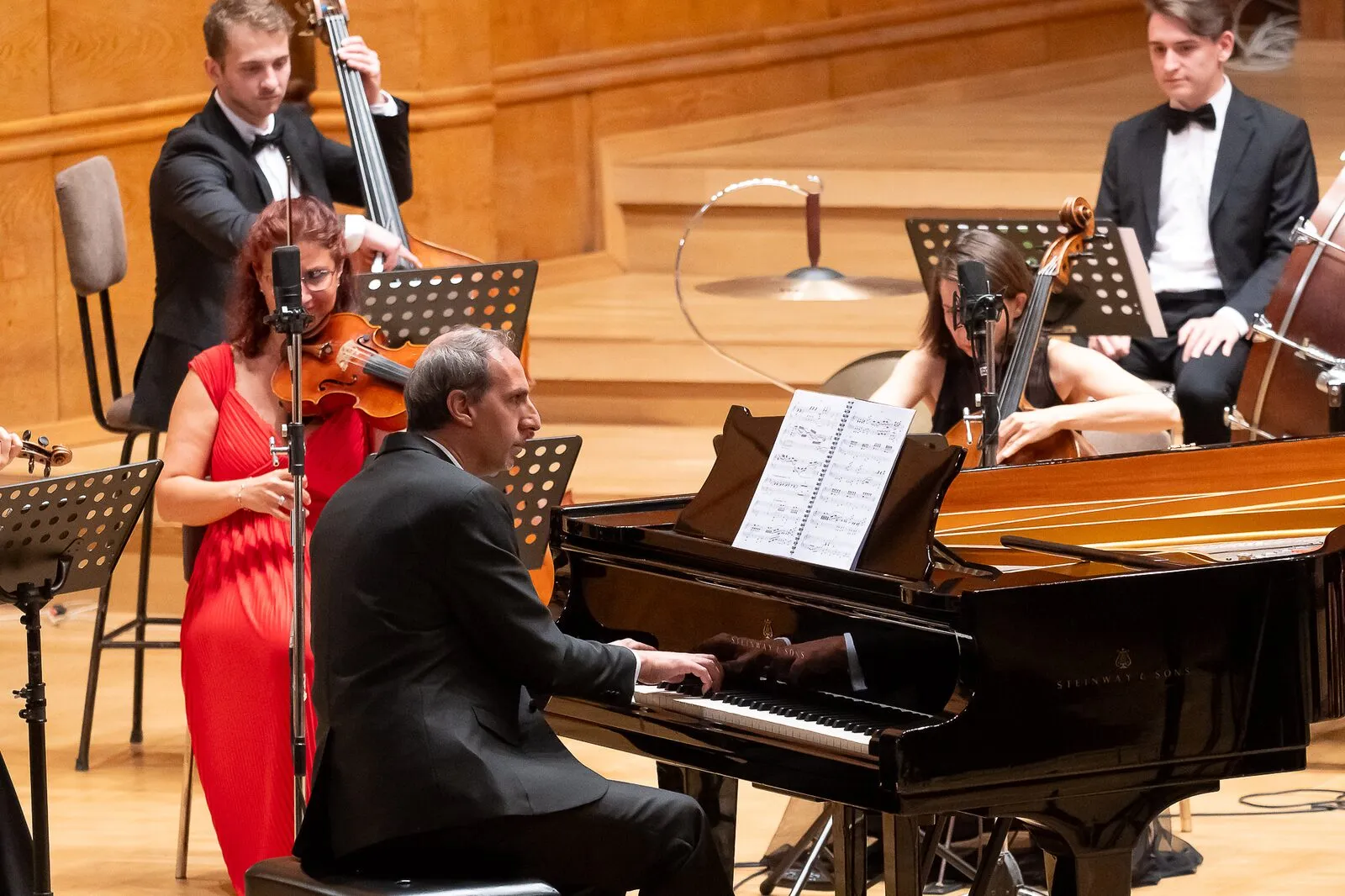
A bespoke arrangement is an existing piece of music rewritten from the score up for one specific ensemble, one specific room and one specific occasion. The melody and the harmony stay recognisably the composer’s; almost everything else — which instruments carry the line, how long the piece runs, where it begins and how it ends — is decided afresh. It is not a cover version, and it is not a medley. It is the difference between buying a suit off the rail and having one cut.
The phrase appears on many event proposals and is rarely explained. So here is what it means in practice, using the programme of our own flagship evening, Homecoming, as the worked example.
How is an arrangement different from simply playing the original?
Most of the music an event would like to hear was written for forces that are not in the room. A Tchaikovsky ballet waltz assumes a full symphony orchestra; an opera aria assumes a pit; a Handel suite assumes the instruments of eighteenth-century London. Played as written by a smaller group, such music either thins out or simply cannot be played at all. An arrangement solves that honestly: it re-distributes the composer’s ideas across the instruments you actually have, so that nothing essential is lost and nothing sounds like a reduction.
A good arrangement also changes things a performance cannot. It can set a piece in a key that suits a particular singer, give a solo line to a particular player, shorten a work to fit a running order, or join two movements so the room never falls silent at the wrong moment.
What did that look like at Homecoming?
Every piece on the Homecoming programme, on 16 September 2026 at Bulgaria Hall in Sofia, was played in an arrangement by Miroslav Georgiev, our artistic director — for an ensemble of fifteen musicians, strings, winds, brass, percussion and piano, performing without a conductor. Three kinds of arrangement sat side by side in one evening.
Translation. Handel’s Music for the Royal Fireworks, Bach’s Orchestral Suite No. 2 and the Waltz from Swan Lake were carried over to the ensemble’s own sound: the ceremony and the dance kept, the scoring made to fit fifteen players in a large hall.
Reshaping. Rachmaninoff’s Rhapsody on a Theme of Paganini was given in a Camerata version of twelve variations, with Miroslav Georgiev himself at the piano — the work’s architecture kept, its length shaped to the evening.
Reimagining. The Carmen Jazz Fantasia, after Bizet, is an original piece built on borrowed material, sung by our guest, the mezzo-soprano Svetlina Stoyanova. And Gershwin’s “Summertime” received a new arrangement, heard in public for the first time that night.
An arrangement is the point where a programme stops being a list of pieces and becomes one evening.
Why does it matter for a conference or a gala?
Because events have shapes that concert repertoire was never written for. A conference opening may need exactly ninety seconds of music that ends on a bright chord as the moderator walks on. A gala may need a reception set that can stretch or shrink with the guests, then a single listening moment that must land within its slot. A national day may want a folk melody from the host country to sit naturally beside a familiar classic. None of these can be bought off the shelf; each is an arranging decision.
Arrangement is also how a programme acquires a shape. Homecoming was designed as a trajectory — ceremonial brilliance, then intimacy, then theatrical dialogue — and the arrangements are what made the joins work: the same ensemble colour running through Handel, Pipkov and Márquez, so that the evening read as one story rather than a sequence of items.
What should you ask for when you commission one?
Four things are worth settling early. The moment: where in the running order the piece sits, and how long it may run. The meaning: whether it should welcome, reflect, celebrate or create stillness. The forces: how many musicians the room and the budget allow, since the arrangement is written for exactly those players. And the lead time: a new arrangement is written, copied into parts and rehearsed, so it needs weeks rather than days — the earlier the conversation, the more the music can do.
It is worth asking, too, what happens afterwards. A bespoke arrangement belongs to the occasion it was made for, and it can return — at an anniversary, a following edition, or a recording that carries the evening beyond the room.
Programmes designed, not assembled
Camerata Bulgarica is a Sofia-based cultural production company that designs and performs bespoke classical and chamber-music experiences for conferences, forums, galas and institutional events across Europe. From 2023 to 2026 we conceived and produced the musical dimension of four successive editions of the ARC conference, where music was part of the architecture of the event itself. Original arrangements and commissions are, for us, the natural extension of a single question: what should people remember when they leave the room?
If you are planning one now
You can read the story of Homecoming and meet the musicians who played it, see how we approach music for conferences and galas, or simply start an inquiry — we reply personally, with questions rather than a brochure.