Journal ·
The Acoustics Conversation: Questions to Ask Your Venue
Before the programme, before the players — a few plain questions about the room decide how the music will sound.
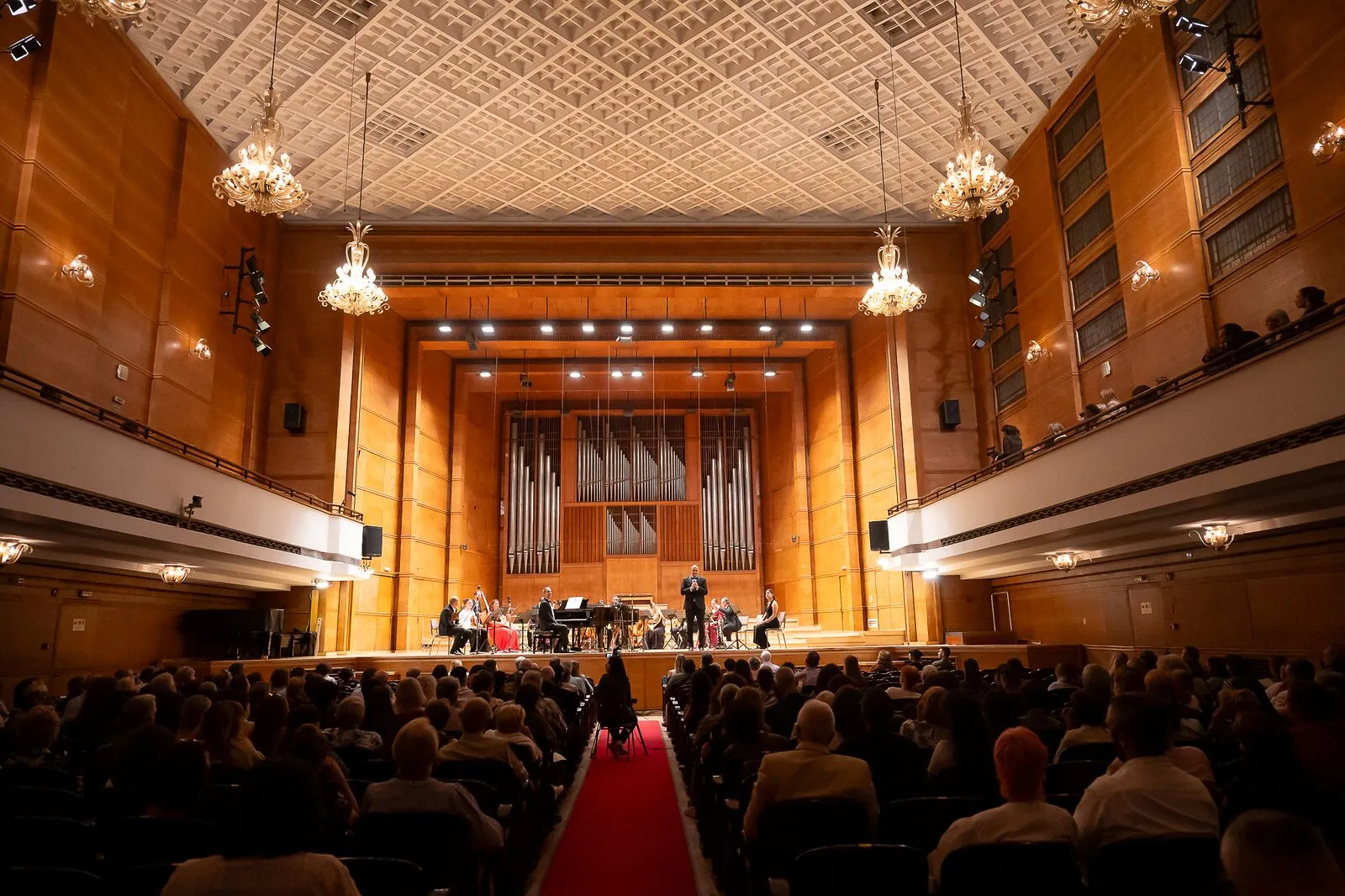
The acoustics conversation is the short exchange between an event planner and a venue that decides, long before a note is played, how live music will sound in the room. It covers five things: how the room itself carries sound, what noise competes with it, whether and how the music will be amplified, where the musicians will stand, and when they can hear the space before the guests arrive. None of it requires an acoustician; all of it is far easier to settle at the booking stage than on the day.
Venues answer these questions well when they are asked. They are rarely asked. Here is what we put to a venue, and why each answer matters.
Why does the room matter so much for classical music?
Classical and chamber music is written for natural sound. A string quartet or a small ensemble has no mixing desk to hide behind: the room is, in effect, its last instrument. A hall with wood, height and a little resonance lifts the players and carries soft passages to the back rows. A low-ceilinged room full of carpet and curtains swallows them; a bare space of glass and stone can blur a lively allegro into a wash. The same musicians, playing the same notes, can sound generous in one room and strained in the next.
Remember, too, that rooms change as they fill. People, clothing and dressed tables absorb sound, so a ballroom that rings when empty may be pleasantly dry by the main course — and one that already sounds dull at the site visit will be duller still with every seat taken.
What should you ask about the room itself?
Ask what the walls, floor and ceiling are made of, how high the ceiling is, and whether there are curtains or panels that can be opened or drawn. Ask whether the room has hosted unamplified music before, and what kind. If you can, stand where the musicians would play and clap once: a short, warm decay is encouraging; a long, metallic ring — or no answer at all — is worth mentioning to your ensemble before anything is decided.
What noise will the music compete with?
Air handling is the quiet enemy of chamber music, so ask whether ventilation can be turned down during a listening moment. Ask where the kitchen and service doors are, whether the room is divided from a neighbouring space by a movable partition, and what else is booked in the building that evening. A soft adagio and a product launch next door do not share a wall gracefully.
The room is the ensemble’s last instrument — and the only one you choose for them.
Does a chamber ensemble need amplification?
Often not — and when it does, it should be subtle. In a modest room, at a moment when guests are listening, acoustic sound is almost always the more beautiful choice. In a large ballroom during dinner service, or outdoors, discreet reinforcement may be needed so the music reaches the far tables without the players forcing their tone.
Ask whether the venue has an in-house sound system and a technician, whether its microphones and speakers suit acoustic instruments rather than speech alone, and where power is available near the performance area. Then let your musical director and the technician decide together; the aim is to be heard, never to be loud.
Where will the musicians play — and is there a piano?
Ask for the dimensions of any stage or riser, and how much of it remains free once the lectern, screens and flowers are in place. Each seated player needs room to bow and breathe, and a small ensemble needs to see one another. Keep them away from air vents, direct sunlight, the bar and the busiest service route.
If the programme needs a piano, ask whether the venue has one, what kind, when it was last tuned, and whether a tuner can attend on the day. An out-of-tune instrument is the one problem no musician can solve in the moment.
When can the musicians hear the room?
Finally, ask about time. When can the ensemble arrive, how long may they have the room to themselves, and is there a quiet window between set-up and doors for a soundcheck? Twenty minutes in the space — playing, listening, adjusting where everyone sits — does more for the evening than any amount of discussion beforehand. Put that window in the running order, not in an email thread.
Music designed for the room it plays in
Camerata Bulgarica is a Sofia-based cultural production company that designs and performs bespoke classical and chamber-music experiences for conferences, forums, galas and institutional events across Europe. From 2023 to 2026 we conceived and produced the musical dimension of four successive editions of the ARC conference, where music was part of the architecture of the event itself. These questions arrive with our first reply to any inquiry, because a programme is only as good as the room that carries it.
If you are planning one now
You can see how we approach music for conferences, galas and corporate events, read our guide to planning live music for a conference or what a bespoke arrangement means, or simply start an inquiry — we reply personally, with questions rather than a brochure.