Journal ·
Live Music at Diplomatic Receptions: Protocol-Aware Programming
A reception is a room of conversations that someone has spent months arranging. Music’s task is to make them easier — never to interrupt them.
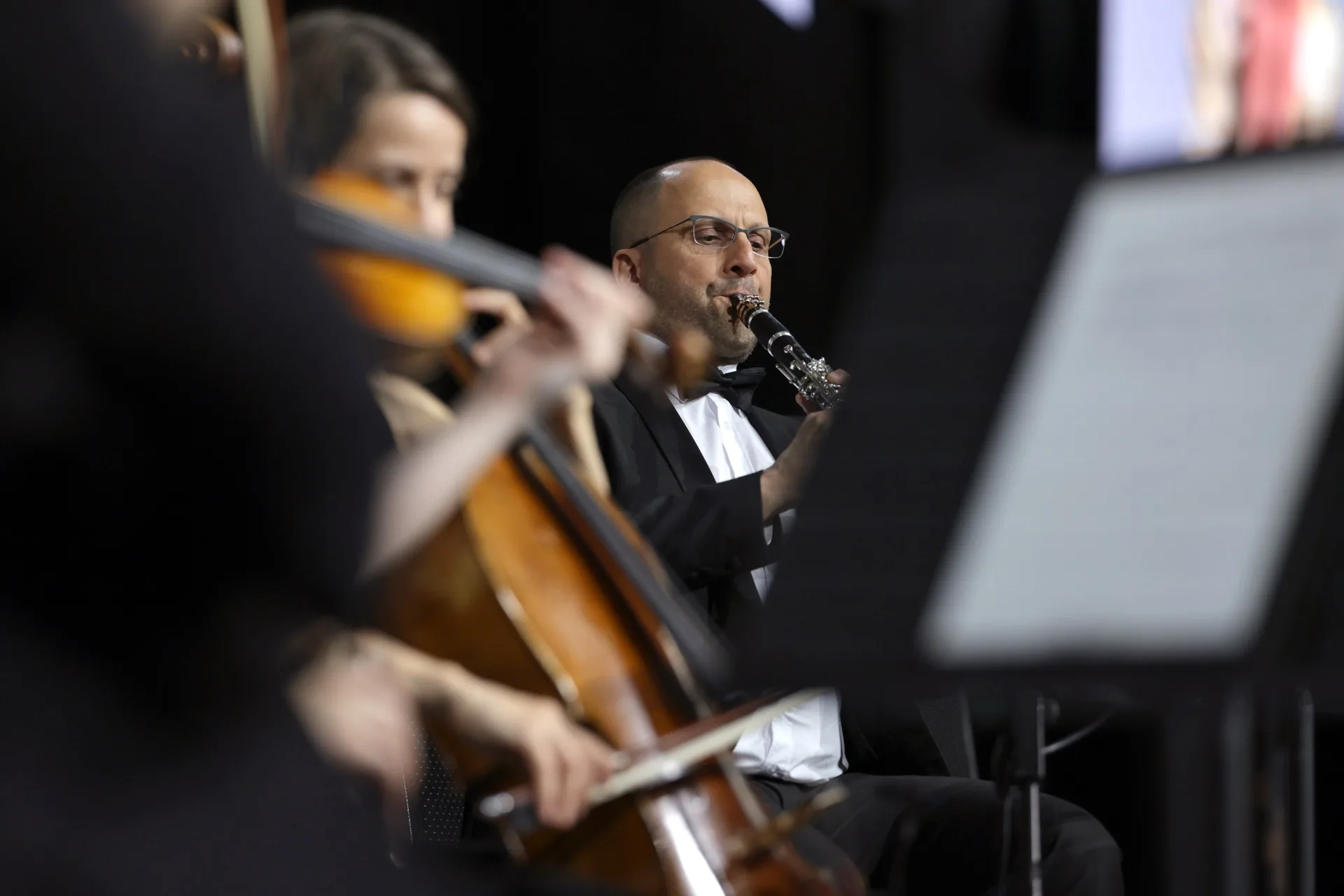
A diplomatic reception asks for music that is continuous, quiet and short-formed: sixty to ninety minutes of playing, in pieces of three or four minutes, pitched so that two people can talk across it without raising their voices. A reception is not an audience. It is a room of conversations that someone has spent months arranging, and the music exists to make those conversations easier — warmer, less effortful, better remembered.
That is the whole brief, and it is harder than a concert. In a hall the music has the room’s permission; at a reception it must earn its place without ever asking for attention. Protocol, not repertoire, sets the shape of the evening — so the programme is designed backwards from a running order the host’s team fixed long ago.
What kind of music suits a diplomatic reception?
Music of even temperament: lyrical, transparent in texture, free of sudden dynamic drops and dramatic silences. Long-breathed melodies work, and so do dances with a steady pulse. What does not work is anything that stops the room — a famous aria, a virtuoso showpiece, a movement ending in a long diminuendo — because a room made to listen must then be released again, and every release costs the host momentum.
Programming across cultures is a craft of its own. A reception usually carries two national identities in it, and the graceful gesture is to let the music acknowledge both: something from the host country’s tradition, something from the guests’. A well-chosen folk melody in a chamber arrangement says more about respect than a paragraph of a welcome speech.
How loud should live music be at a reception?
Quieter than instinct suggests — and the level should change as the room fills. Thirty guests in a marble hall and three hundred in the same hall are two different acoustics, and an ensemble adjusts to that in real time — the strongest practical argument for players over a playlist.
Placement carries as much of the balance as volume does. Put the musicians where the sound reaches the room indirectly — off a side wall, away from the receiving line and the bar — and never between the door and the guest of honour. Then agree one thing in advance: who may ask for less. A single named person with the authority to signal for softer or shorter keeps the whole evening calm.
At a reception, the measure of the music is not applause. It is that the conversations went on longer.
Where do the protocol moments sit?
Three of them shape most receptions: the arrival, the formal welcome with its toasts, and the departure of the principal guest. Music plays freely through the first, stops cleanly before the second, and resumes once the room has been released. The line worth protecting is the one before the speeches — the ensemble should finish a whole phrase and fall silent a minute before the host is announced, rather than fade out mid-piece as a microphone opens.
If anthems belong to the evening, treat them as the single item to settle in writing: which anthems, in which order, played live or from a recording, whether guests are asked to stand, and who gives the cue. Almost everything else at a reception can be improvised gracefully. Anthems cannot.
How many musicians fit the room?
Fewer than the room suggests. A duo or a trio serves most receptions better than a larger group: they occupy a corner rather than a stage, they carry at a lower volume because fewer instruments compete, and they can shorten or extend a piece on a glance, without a conductor. Keep larger formations for receptions with a genuine listening moment — three or four minutes, announced by the host, when the room is asked to attend to one piece before returning to itself.
The questions worth settling with the protocol team
Four of them, and they take ten minutes. Where will the receiving line stand, and when does it break up? At what minute is the formal welcome, and how much drift should we plan for? Is there a moment when the room should be asked to listen, or none at all? And who, on the night, may ask us for less?
Answered early, they turn music from a booking into part of the evening’s design — the difference between an event with musicians in it and an event that was composed.
Chamber music in a state room
Camerata Bulgarica is a Sofia-based cultural production company that designs and performs bespoke classical and chamber-music experiences for conferences, forums, galas and institutional events across Europe. From 2023 to 2026 we conceived and produced the musical dimension of four successive editions of the ARC conference, where the same discipline applied at a larger scale: music placed to welcome, to reflect, to celebrate and to create stillness, rather than to fill the air. We treat chamber music as a contemporary language rather than a historical genre — as much at home in a reception room as in a concert hall.
If you are planning one now
If you are shaping a national day, a delegation dinner or an institutional reception, you can read how we approach music for galas, ceremonies and diplomatic occasions, see the companion guides on stage time at a gala dinner and the running order of an award ceremony, or simply start an inquiry — we reply personally, with questions rather than a brochure.